One question I get all the time in consultations: “Can I keep one of my credit cards out of the bankruptcy — and keep using that card while my case is going on?” It usually comes from a good instinct. People want a safety net for emergencies, or they have a card with a long history they worked hard to build.
I understand the thinking. But after practicing bankruptcy law in New York since 2008, I can tell you the honest answer up front — and then explain the part most people don’t expect: losing your cards matters far less than you think.
The Short Answer: No, You Can’t Pick and Choose
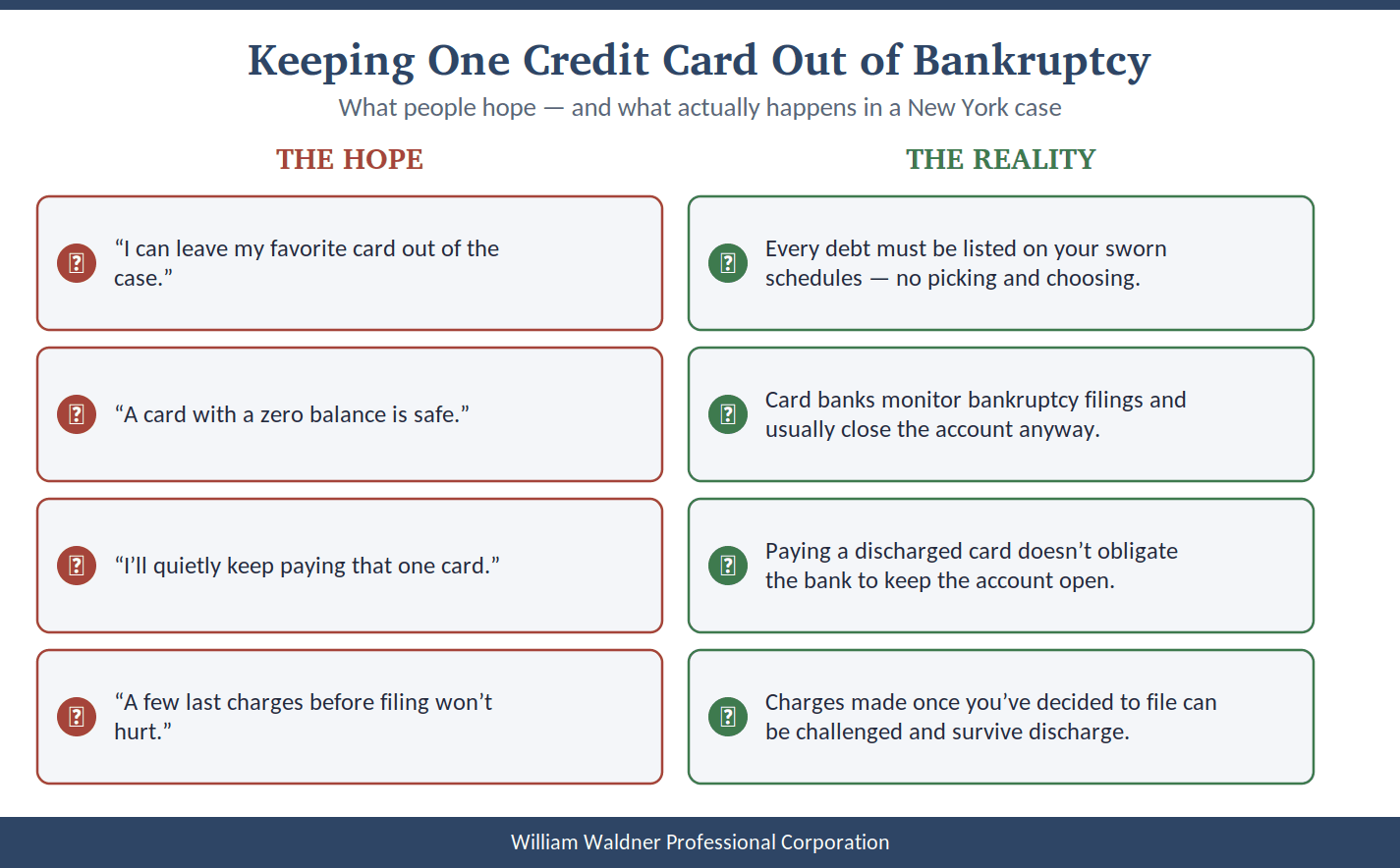
When you file bankruptcy, you sign your schedules under penalty of perjury, and the Bankruptcy Code requires you to list every debt you owe and every creditor you have. Not the ones you choose. All of them. There is no option to leave a favorite card off the paperwork, and trying to do so quietly is one of the fastest ways to put your entire discharge at risk.
So if a card has a balance, it goes in the case. That debt gets discharged with the rest of your unsecured debt in a Chapter 7, or paid according to your plan in a Chapter 13 — and the bank closes the account.
What If the Card Has a Zero Balance?
Here’s where people get creative: “What if I pay one card down to zero before filing? Then I don’t owe them anything, so there’s nothing to list, right?”
Technically true — a card with no balance isn’t a debt. But it almost never works, for a simple reason: credit card banks monitor bankruptcy filings. They subscribe to services that flag new cases and watch their cardholders’ credit reports. In my experience, once the bank learns you filed, it closes the account — even when you owe that bank nothing at all. The card you carefully protected usually dies anyway.
And paying one favorite creditor down right before filing can create its own problems in your case, so it’s something to discuss with your attorney before you do it — not after.
You Also Can’t Quietly Keep Paying One Card
Some people figure they’ll list the card like they’re supposed to, but keep making the payments so the bank keeps the account open. The law does allow you to voluntarily repay any debt after bankruptcy if you choose to. But repaying a discharged debt doesn’t obligate the bank to do anything for you — and in practice, the account is closed the moment the bank processes your filing. You’d be paying for a card that no longer works.
Whatever You Do, Don’t Keep Using the Card
The truly dangerous version of this plan is running up charges on a card once you’ve already decided to file. Recent charges made when you knew bankruptcy was coming can be challenged as fraud, and those specific debts can survive your discharge. I’ve written a full post on this: Can I Use My Credit Cards Right Before Filing Bankruptcy? The short version: once filing is on the table, put the cards down.
What About a Card Where You’re an Authorized User?
One genuine exception. If you’re only an authorized user on someone else’s account — a spouse’s or parent’s card, for example — that debt belongs to the account holder, not you. Your bankruptcy doesn’t discharge it and generally doesn’t close their account. Be careful to distinguish this from a joint account, where you are legally responsible: joint debts must be listed, and your filing can affect the co-signer. If you’re not sure which kind of account you have, we’ll sort it out in your consultation.
The Good News Nobody Expects
Here’s what I tell every client worried about losing their cards: credit comes back much faster after bankruptcy than people believe. Most of my Chapter 7 clients start receiving new card offers within months of their discharge — the banks know you’re debt-free and can’t file Chapter 7 again for eight years, which actually makes you a safer customer than you were before. Secured cards are available almost immediately, and used responsibly, they rebuild your score step by step.
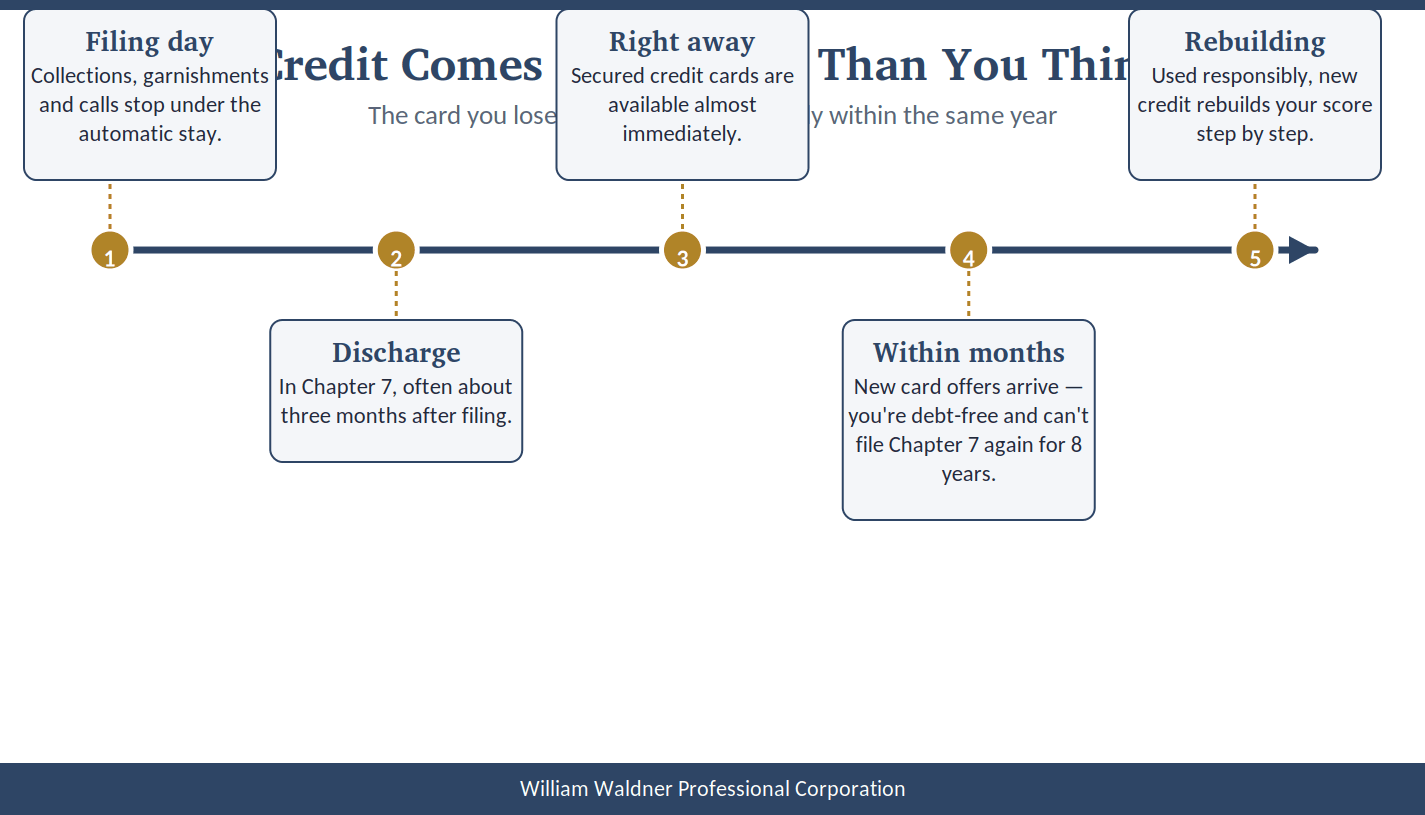
In other words: the card you’re trying to save is replaceable — usually within the same year. The tens of thousands in debt you’d keep by not filing is the far more expensive problem. (And if you’ve built up rewards points, those are usually safe — use or transfer them before the account closes.)
Worried About Losing Your Cards? Let’s Talk It Through
If this question is what’s keeping you from getting debt relief, let’s spend 20 minutes on it — free. I’ll look at your actual cards and debts and tell you honestly what would happen to each one. Call or text us at 212-244-2882 or schedule a free consultation. At William Waldner Professional Corporation, we’ve helped thousands of New Yorkers through this exact worry — and most of them tell us afterward it was never worth losing sleep over.